

Recently, several peers have asked us to address spasticity—toe spasticity to be specific. Spasticity is a common secondary complication of SCI, with some estimates of up 80 percent of people with SCI experiencing it in some form. It’s hard to know how common toe spasticity is, but we know it can cause a range of problems, from simply walking for those with incomplete SCI, to putting on a pair of shoes when your toes are curled or clawed.
Helping us address this problem is Rachel Abel, an inpatient OT at GF Strong.
Toe curling—it’s an unconscious reaction to pleasure for many people. But for people with SCI, toe curling resulting from spasticity is often anything but pleasurable.
The first thing I would ask anyone complaining about toe spasms is if it’s an ongoing problem for them, or if it’s something that’s just cropped up recently. If it’s the former, then there are a number of strategies that can be used to reduce or even eliminate the spasms, or minimize their impact. But if it’s the latter, there could be some type of health change that’s triggering the spasticity—for example, a small fracture in the foot. If you’ve just experienced toe spasms for the first time, or a sudden increase in the frequency or severity, I would strongly suggest taking your concerns to your physician with the goal of having a scan to rule out fractures or other health triggers.
Assuming that toe spasticity is a common occurrence in your life, there are a number of ways you can attempt to minimize either the spasticity itself, or the impact in your life.
First, minimizing the problem. There are several strategies you can employ, depending on the frequency and severity. The first is doing everything you can do yourself to improve the tone of your toes and every other part of your body that is prone to spasticity—through stretching and range of motion exercises. You can simply stretch your toes and feet, or have a caregiver do it for you. Many people report success with this alone. But many people with SCI report excellent success for spasticity throughout your body from committing to a daily, whole body stretching regime that you can do yourself, or with assistance from a caregiver. No doubt you had a daily regime tailored for you during rehab, but life gets in the way sometimes, and it’s easy to become less diligent about keeping up the effort years later.
A good overview of stretching/range of motion exercises for people with SCI can be found at the HealthLink BC website. There are, of course, medications for spasticity, including baclofen (Lioresal), clonazepam (Klonopin), dantrolene (Dantrium), diazepam (Valium), and tizanidine (Zanaflex). These can be tried, but many health professionals are reluctant to prescribe them because they have side effects that outweigh benefits.
However, an approach to severe, ongoing spasticity that is gaining popularity is botulinum toxin-A (the Botox brand is one form of this) injections. These injections are carefully placed using ultrasound to deaden the nerves and relax the muscles involved. Studies have demonstrated good results. The downside is that the length of time for relief is limited to about three months. As well, repeated use can permanently deaden the nerves, so caution is warranted.
Another option may be a neurotomy. This procedure, performed under a microscope, identifies nerves that contribute to spasticity and cutting them. This is a permanent procedure, however, and obviously not one that anyone who is ambulatory and needs their spared function in their toes. You definitely do need to be cautious about how this may affect mobility.
With the exception of stretching and range of motion exercises, all of these treatments listed above begin with a referral from your family physician.
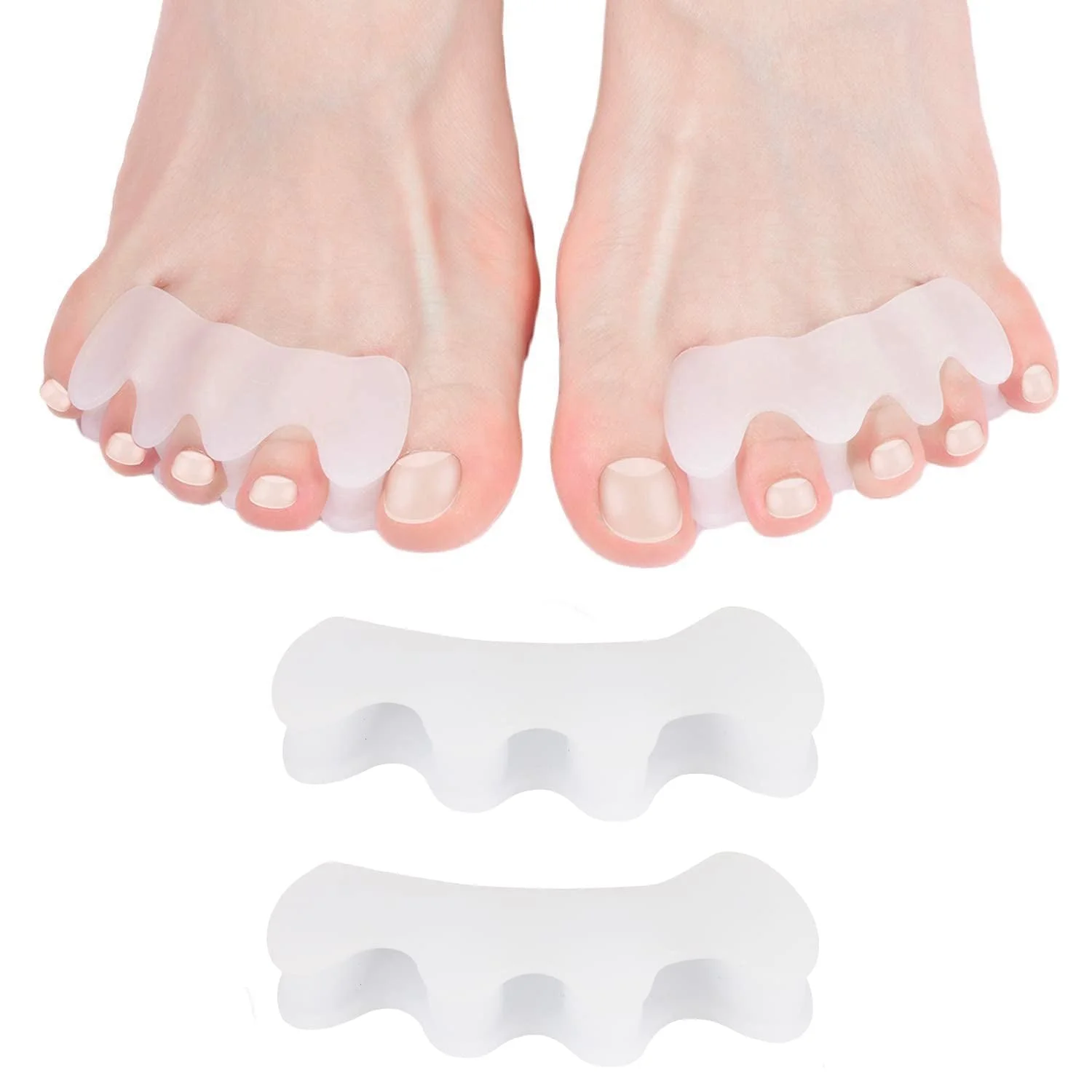
Finally, there are ways to minimize the impact of toe spasms in your life. You can be fitted for a foot brace or splint, or even an ankle foot orthosis (AFO), all of which could hold your toes flat. Custom toe spacers and molds can be very helpful. Some people report having success using Yoga toe spacers. You could also consider buying and wearing shoes that open right to the toe so you can manually sort out your toes when putting them on. And a simple solution for some might be as easy as buying and wearing shoes that are a few sizes too large for you, as they’ll leave that much more space for your curled toes. These can really be useful if you’re wearing toe spacers or any type of foot brace or splint.

This article was originally published in the Fall 2019 issue of The Spin. Read more stories from this issue, including:
- Wheel Love Documentary
- Shoulder Pain Research
- Accessible Camping
And more!


