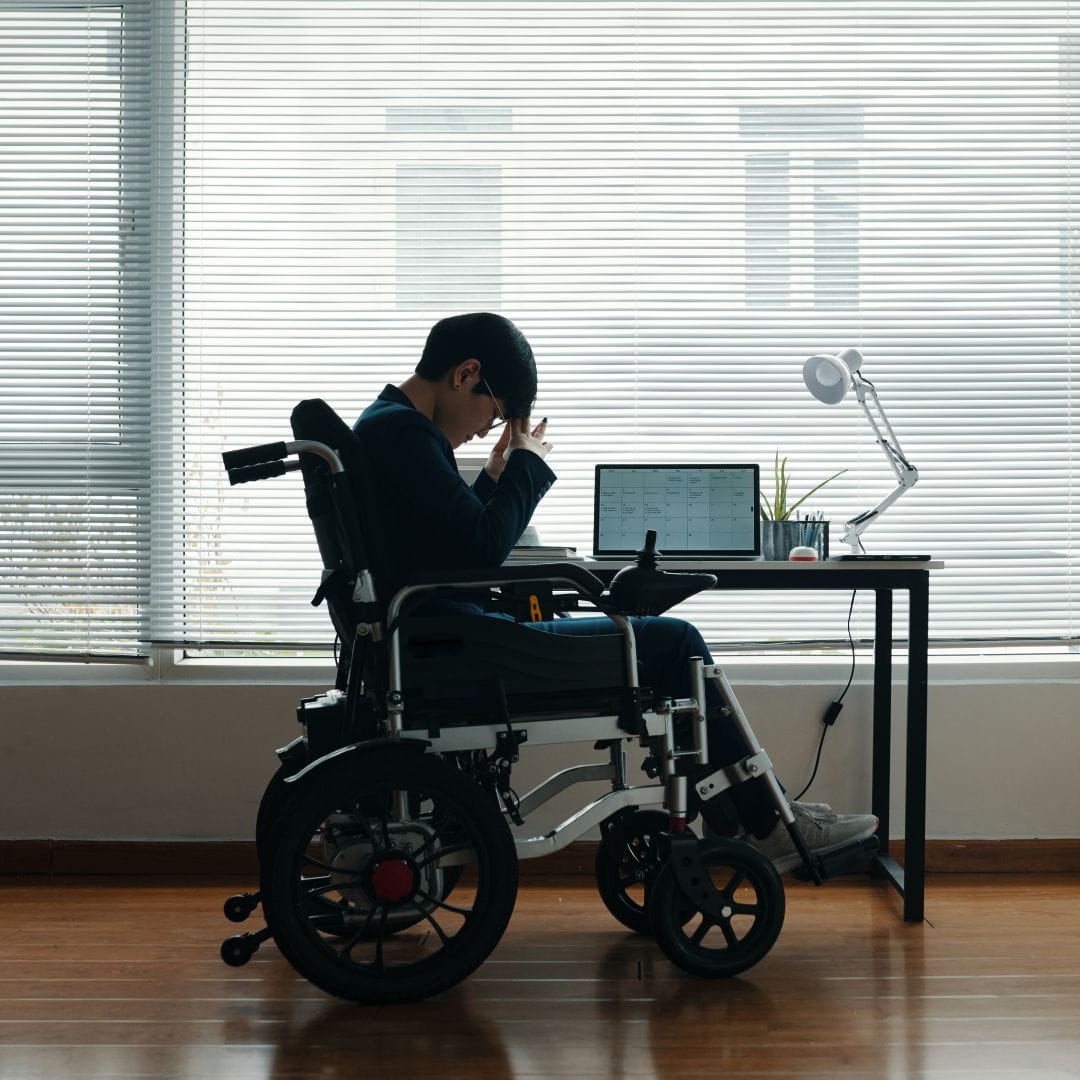
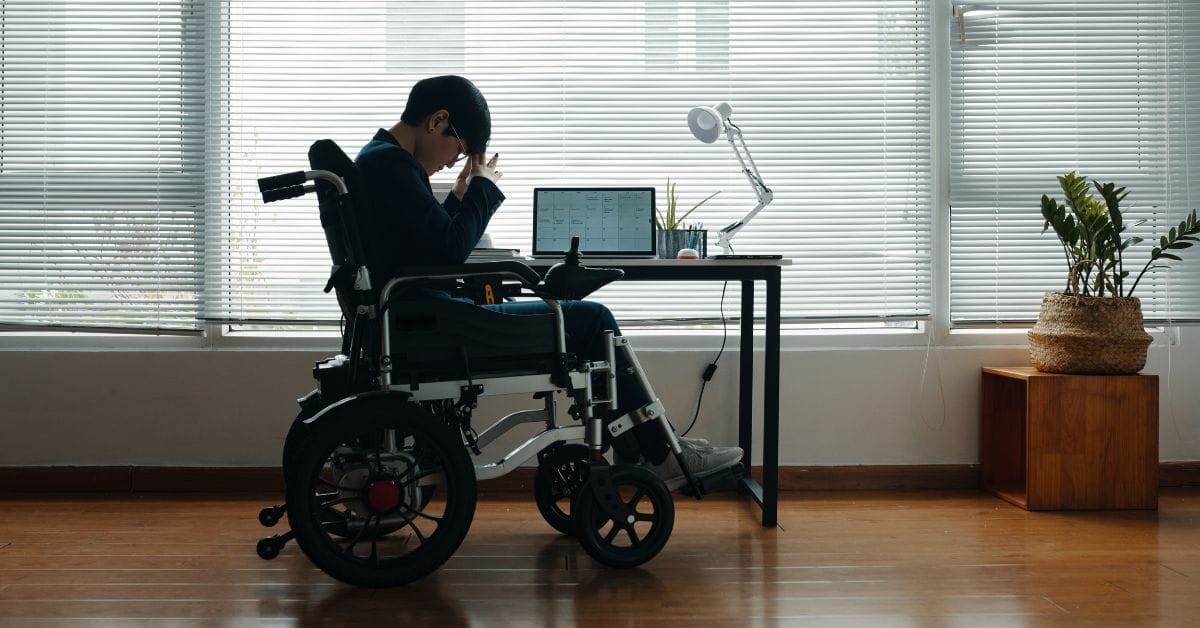
Most of us know what it feels like to be tired after a long day. But what if no amount of rest made a difference? For up to half of people with spinal cord injury (SCI), fatigue is a deep, persistent heaviness that rest doesn’t fix.
Maybe you can only manage one or two activities before you need to lie down again. Maybe everyday things—cleaning, working, socializing—take twice as long and leave you completely depleted. You might feel low, but instead of bouncing back with connection or movement, fatigue keeps you isolated, and guilt creeps in. You might find yourself using your mobility aids or power chair more than you’d like because walking or wheeling becomes exhausting. And caffeine? It doesn’t touch it.
This type of fatigue, referred to as central chronic fatigue, is more than just feeling sleepy. It’s a full-body exhaustion that can isolate you and sap your quality of life.
While some research exists, strong evidence on effective fatigue treatments after SCI is limited. So Dr. Janice Eng, Professor and Canada Research Chair at the University of British Columbia, Co-Director of the Centre for Aging SMART at Vancouver Coastal Health, and Co-Principal Investigator of the SCIRE (Spinal Cord Injury Research Evidence) Project, plus Dr. Carlos Cano-Herrera, Postdoctoral Fellow, took a closer look.
With support from the Praxis Spinal Cord Institute, ICORD, and the Rick Hansen Foundation, they investigated the best available research on fatigue treatments in people with SCI. Their goal: find out what really works. Their paper “Treatments of fatigue after spinal cord injury: a systematic review and meta-analysis” was published in the journal Spinal Cord in March 2025.


Why Fatigue is So Tough to Treat
Eng and Cano-Herrera’s approach to the study was to review research published on treatment for fatigue in people with SCI and analyze the methods and findings. To keep the evidence strong, they only included randomized controlled trials (RCTs), the gold standard in clinical research, in their review process. Fatigue after SCI involves both physical and psychological factors, and Eng explains that with so many variables, the placebo effect (where participants in control groups show improvement despite no active treatment) can be significant. Using only RCTs, where participants are randomly assigned to treatment or control groups, helps reduce this effect and strengthen the findings.
With these strict criteria, they found just six high-quality RCTs. “We were surprised,” says Cano-Herrera. “Just six studies is low compared to other topics where we have many higher quality studies.”
Measuring fatigue itself is another challenge. “Some papers measure fatigue in different ways,” says Cano-Herrera. The most commonly used tool was the Fatigue Severity Scale, a set of nine questions that assess how severe fatigue is and how much it affects daily life. However, only half of the studies looked at fatigue as the main outcome; the other half looked at factors like pain or fitness and only measured fatigue as a side note. As Eng explains, “One of the problems if the primary purpose of the paper is not fatigue and they measure fatigue as one of their 10 or 20 measures, is that this study is not really powered to have enough people to detect fatigue. The reason fatigue is not shown to be significant is they simply didn’t design it for fatigue.”
Fatigue rarely shows up alone. It’s tied to pain, sleep quality, medication side effects, depression, anxiety, and more. For example, one study found people with high pain were nine times more likely to experience elevated fatigue. Everyone who reported depressive mood also had fatigue, while none of the participants with low fatigue reported depressive symptoms. While many studies measured pain and mental health symptoms, none examined sleep or medication issues—two major contributors to fatigue. That’s surprising given previous research shows sleep-disordered breathing is common in people with SCI, especially with higher-level injuries, and medications often prescribed after SCI, like baclofen, gabapentin, and amitriptyline, are known to cause fatigue.
Overall, Cano-Herrera says, “[We need] higher level of quality studies like RCTs, focusing on fatigue. For people with SCI who want to deal with fatigue, we need more recommendations and more guidance about the interventions that improve fatigue and the dosage required.”
So, What Works?
The interventions studied fell into three categories: massage therapy, exercise-based interventions, and behavioural interventions. While massage therapy (including Swedish massage, broad compression massage, and reflexology massage) didn’t improve fatigue, exercise-based and behavioural interventions showed promise.
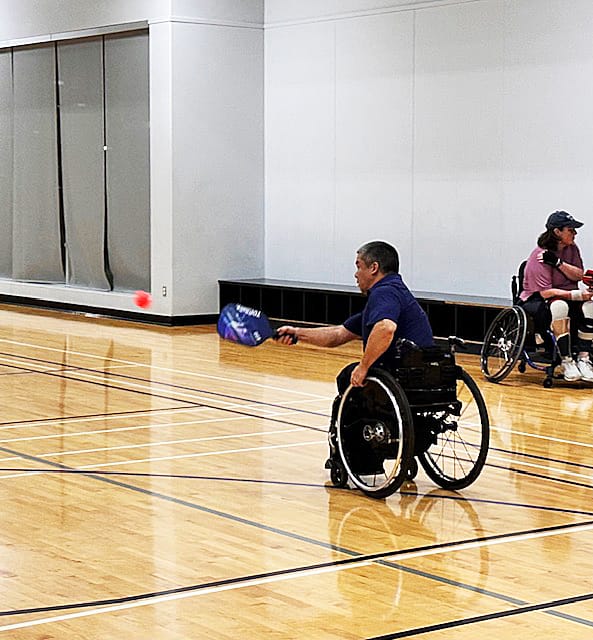
Exercise treatments significantly improved fatigue for participants. This echoes evidence in multiple sclerosis and the able-bodied population, where exercise is a leading recommendation for managing chronic fatigue. The studies included in the review were an upper limb virtual reality exercise program (45 minutes, three times per week for six weeks) and a moderate-intensity arm-crank home exercise program (50 minutes, four times per week for six weeks). However, there isn’t enough evidence yet to say which types or amounts of exercise are most effective in reducing fatigue in people with SCI.
“Sometimes if you have fatigue, you don’t think that exercise is going to help you. You think that if I’m doing exercise, I will be more fatigued,” says Cano-Herrera. But Eng emphasizes the long game: “You might feel a bit more tired at the front end, and that’s normal and natural. It’s about building up some endurance, so you can overcome that.”
Behavioural interventions focused on promoting active lifestyles also led to meaningful improvements. One intervention involved self-management education through a book and 10 group and individual sessions over four months. Another used Motivational Interviewing over eight months with 13, one hour in person meetings.
“Having a coach, motivator, or yourself understanding the pacing and self-management aspects of physical activity are really important,” says Eng. “You can figure out ‘Okay, I’m going to schedule this in and see what parts of the day I’m really tired. Maybe I shouldn’t be exercising at that part of the day. Maybe I should be exercising at this part of the day and how much and what quantity?’ Those are aspects of self-management that I think are really helpful for a person to become attuned to.”
And what about medication? Eng explains, “There are some medications that are used in other conditions with fatigue. For example, modafinil is used for post-stroke fatigue. However, in stroke there’s a much larger population, so it’s easier to do RCTs. There hasn’t been any RCTs [in the SCI population], so the evidence isn’t there yet.”
One Size Doesn’t Fit All
Both researchers agree that fatigue management calls for an early and individualized approach. Eng says, “It’s important to look at the fatigue early before it becomes all-encompassing… Hopefully some of [the factors] could be preventative and reduce fatigue before it gets to such a level that someone can’t cope with it.”
Ideally, fatigue management would involve a multidisciplinary team. A physiatrist or general practitioner would start by reviewing your full health picture, ordering lab testing to rule out other conditions, and, “check[ing] for factors that we know are related,” says Cano-Herrera. “Ask about the medication they are taking, ask about psychological symptoms like depression or anxiety, ask about sleep problems.”
From there, treatment could involve education and practicing self-management skills like pacing (perhaps with help from a coach), adjusting medications that cause fatigue, managing pain, improving sleep hygiene, and starting a structured exercise program. “Physical therapists or other professionals prescribing exercise need to be aware of a person’s fatigue status,” notes the review. Exercise should be moderate, introduced slowly, and revisited regularly with follow-up.
And when it comes to mental health, the link with fatigue is clear. “That’s one of the reasons to look at fatigue earlier than later,” Eng says. “There can be really serious [mental health] symptoms that can develop if fatigue is not addressed.” Treatments like cognitive-behavioural therapy (CBT) or selective serotonin reuptake inhibitors (SSRIs) may help ease fatigue associated with mental health symptoms. Interestingly, both CBT and self-management approaches focus on building self-efficacy. By helping you feel more capable and in control, they may empower you to regain energy and resilience and take back the reins from fatigue.
The bottom line is that fatigue after SCI is common and complicated. But it’s not hopeless. Understanding fatigue and knowing there are steps you can take can help you take back some control.
Looking for the full research evidence on fatigue and SCI? Visit scireproject.com/evidence/fatigue-following-sci.
20 Years of SCIRE Community
When the SCIRE (Spinal Cord Injury Research Evidence) Project launched 20 years ago, it started as a bold idea: What if we could bring SCI research together into one accessible, evidence-based resource?
“At the time, I was the Associate Director of Rehabilitation for the ICORD Research Center. John Steeves had asked each of the three Associate Directors to come up with a small project,” recalls Dr. Janice Eng. And so, the SCIRE Project was born.
Some warned that sharing systematic reviews online would prevent journal publication. But the opposite happened: journal editors asked her to submit SCIRE’s work. “One of my complaints was that we publish all this information in journals and it’s not accessible to clinicians or people with lived experience. Having it public provides a sense of transparency of what research is actually doing and what it is actually telling us.”
Dr. Andrea Townson once carried printed spiral-bound copies and CDs of the first SCIRE edition to conferences. “Seeing it grow into the go-to online reference for clinicians and health professionals with ongoing updates has been a wonderful evolution,” she shared in SCIRE’s Spring 2025 newsletter.
Over two decades, that idea has grown into a global standard and an international collaboration between scientists, clinicians, and consumers. Co-led by Eng and Dr. Robert Teasell, she shares, “We have a quarter million people who come to the website each year and that continues to grow. SCIRE provides a credible source of evidence to support clinicians in their practice and for people with lived experience to see the evidence behind, what we hope is, a comprehensive selection of treatments.”
The SCIRE Professional site, created for health professionals, now includes 100+ publications. Its most-used content includes outcome measures and treatment option—practical resources that can be immediately applied in clinical practice. Eng notes they aim to offer clear, specific information, like recommended frequencies for electrical stimulation, which are often hard to find in journals.
In 2017, SCIRE expanded with the launch of SCIRE Community, a companion site for people with lived experience, their families, and caregivers. It now features 60+ articles on topics like Botox for spasticity, osteoporosis, stem cells, autonomic dysreflexia, and more. “Neuromodulation has been a topic we’ve recently addressed because there’s so many new sensory or motor stimulation devices that people are wondering about,” says Eng. “We try to be responsive to what people in the community tell us can help make the website more of a one stop shopping for them.”
At SCI BC, we consider SCIRE one of our most trusted sources of up-to-date SCI research and encourage peers and professionals alike to explore what it offers.
Visit SCIRE Professional at scireproject.com and SCIRE Community at community.scireproject.com.
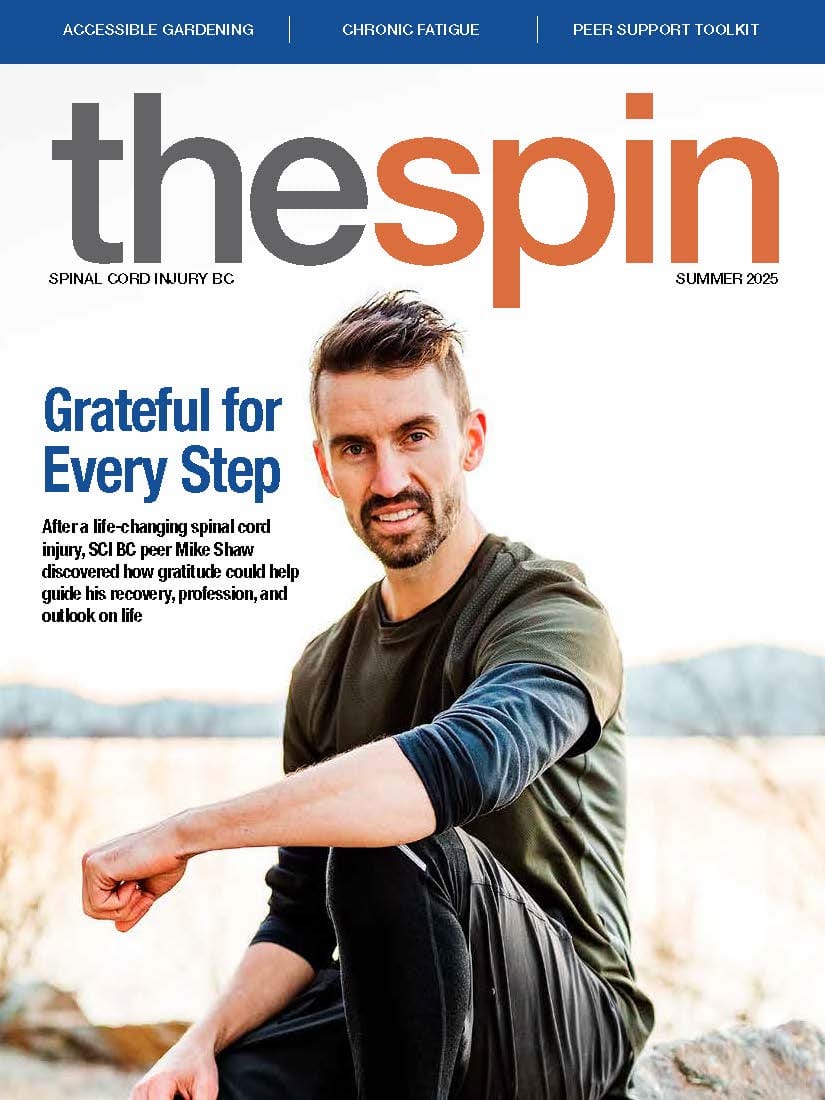
This article originally appeared in the Summer 2025 issue of The Spin. Read more stories from this issue, including:
- Accessible Gardening
- Gratitude
- Peer Coaching
And more!