
The best souvenirs of any trip are the stories you bring home. SCI BC Peer Murray Siple has no shortage of extraordinary wheelchair travel tales to share, including from excursions to London, England. Follow his adventures around the world in his Access and Allies travel series.
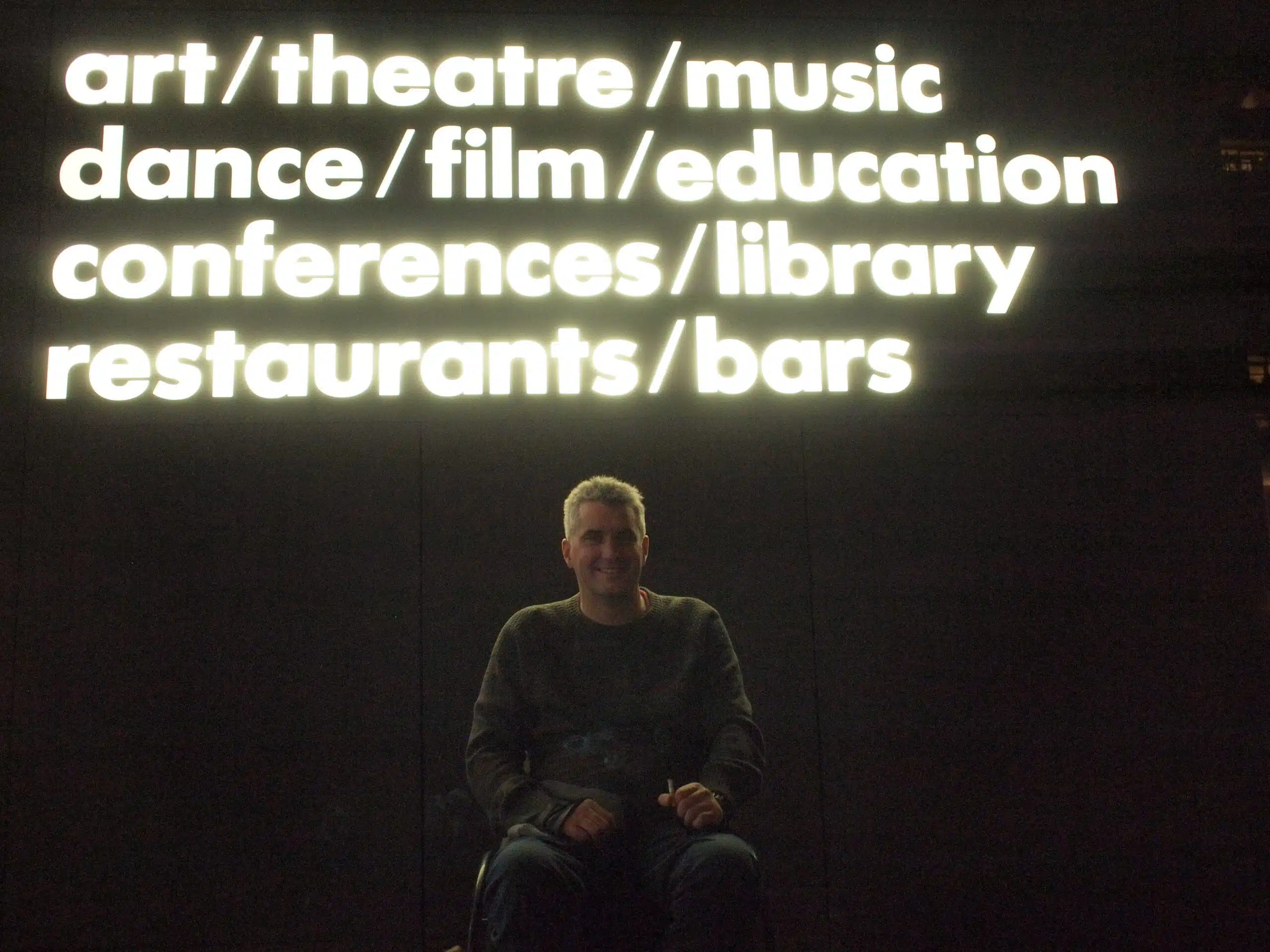
My first trip to London was by myself. I landed at Heathrow Airport—which had flooded from a rainstorm—and waited for assistance off the airplane because the gate staff was dealing with water rising into one of the terminals.
I wondered what London would be like, as I sat alone in the middle aisle of a jet for an extra hour. As the cleaning staff began vacuuming around me, an empathetic pilot dodged around the vacuum and gave me a whiskey (fight staff are unable to assist you off the aircraft, only the ground crew can).

London (once you’re off the plane!) is very accessible. The city’s iconic Black Cab taxis can accommodate a manual wheelchair, but note: inside a Black Cab there are no tie-downs, so your brakes will get stretched. And while there’s barely anything to hold onto, you’ll be passing by album cover and movie locations relentlessly, so the trip is worthwhile.
There are other options for wheelchair transportation, but I found hailing a Black Cab the most convenient and best use of my short time in the big city.
I visited the famous St. Paul’s Cathedral (1400 years-old) and it had an elevator! But that’s not always the case in London—on one rainy night during my trip, friends in dress shoes carried me up four stories on glass stairs to a party, and then back down.
On the upside, art galleries and museums are not only entirely accessible but entirely free. Furthermore, at Harrod’s Department Store, I was offered the “employee discount” because they saw me as a traveller using a wheelchair (even with that hookup though, I could only afford a small address book). On Oxford Street, I reached for a cigarette, and a passerby lit it and then gave me the lighter. At a pub, I ordered a pint and misplaced my wallet, but a man behind me bought my round (I found my wallet after, between my shoes). When I left the pub, a woman on the bus yelled, “Murray!” (London is a city of 9 million…)

When it came to finding a place to stay, I chose The Ace Hotel. They’re retrofitted into historic buildings, and the accessible rooms have a small living space, micro kitchen, a music system, street art and vintage industrial furniture. All their hotels have bars frequented by local artists, writers and musicians.
The Ace Shoreditch’s bar was under renovation during my stay, so I hit the pub across the street where a disheveled looking man with a ball cap pulled tightly down over his eyes took a seat at my table. Defensively, I asked, “What’s up?” Turns out, he was the Ace Hotel founder, Alex Calderwood. Stressed from the explosion of success his hotel chain created, he found solace in disguising himself. I bought us a round of pints and complimented him on the hotel designs, fun vibes and accessibility. Two weeks later I learned Alex had passed away, but I will always fondly remember the time we shared together.


