

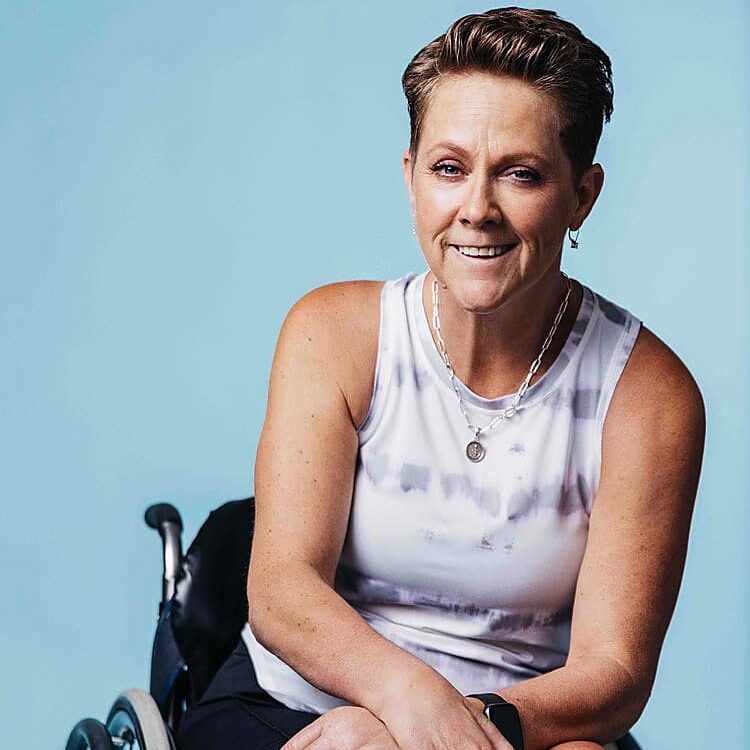
“Menopause is the one life stage that all women will go through,” explains Margaret Conquest, a tetraplegic peer and sexual health educator. While not all women, or individuals assigned female at birth (AFAB), will have children, everyone with functioning ovaries will eventually experience menopause.
Conquest partnered with SCI BC to deliver Life After Tampons, a cheeky online workshop series where women with SCI talked openly about menopause. We recapped the series in the Ask InfoLine column in the Fall 2024 issue of The Spin.
For Teri Thorson, SCI BC’s Manager of Peer Coaching and Outreach, the timing was perfect. “When I started experiencing symptoms, it was challenging to find information about spinal cord injury and menopause,” says Thorson. “It took me three years to meet someone who I felt could listen to me and properly address my [menopause] symptoms, and consider that they weren’t disability-related, they were menopause-related. When I talked to peers, they had the same experience. Women are struggling.”

Women’s Health Research Gap
In Canada, women make up about one-fifth of the SCI population, yet women’s health research has a long history of exclusion. Until 1997, researchers in Canada weren’t required to include women in clinical trials at all. When women were included, their results were rarely analyzed separately, making it impossible to know if diagnoses or treatments worked differently for women. Pre-clinical studies often relied solely on male animals because female hormones were considered “too messy” to study.
These gaps show up everywhere, not just in reproductive health. Heart disease is the leading cause of death for women, yet women make up less than a third of the participants in cardiovascular trials. The result? Higher rates of misdiagnosis, delayed treatment, and more adverse drug reactions.
And the gap persists. A review of research funded by the Canadian Institutes of Health Research (CIHR) from 2009-2023 found that less than 10% of projects mentioned sex or gender, and only 7% focused on women’s health. In 2025, the U.S. National Institutes of Health (NIH), the world’s largest health research funder, was directed not to approve grants mentioning ‘gender’ or ‘women’.
Women deserve accurate, affirming information about menopause. That’s why Thorson and Kate McBride, Clinical Nurse Specialist with Vancouver Coastal Health’s Sexual Health, Rehabilitation Service and Adjunct Professor with the Faculty of Applied Science in the University of British Columbia (UBC) School of Nursing, teamed up to form a working group of clinicians and persons with SCI to start filling the gap, and in 2025, with support from the BC Rehab Foundation, Thorson, Conquest, Dr. Kerstin Gustafson, Dr. Viet Vu, and Dr. Stacy Elliott presented a workshop on menopause and SCI at the 64th International Spinal Cord Society (ISCoS) Annual Scientific Meeting in Sweden.
Conquest says her own journey motivates her work. “I want women to make choices out of an abundance of information, not fear.”

Menopause Basics
Many misconceptions surround menopause. Premenopause spans the years after puberty when menstrual cycles are generally regular. What most people call ‘menopause’ is actually perimenopause, the transition that begins when the ovaries start shutting down.
Perimenopause can start up to 10 years before a woman’s final menstrual period, meaning some enter this phase in their mid-30s. Fluctuating estrogen and progesterone levels change bleeding patterns: heavier periods, longer cycles, skipped periods, or doubled-up cycles. Conquest calls this the “chaos zone”, when many classic menopause symptoms first appear.
Menopause itself is defined as 12 consecutive months without a period, or when treatments or surgery stop ovarian function. The usual age range is 45-58, but autoimmune conditions, primary ovarian insufficiency (POI), polycystic ovarian syndrome (PCOS), or surgical removal can trigger earlier onset. And after you reach menopause, you enter postmenopause for life.
Before bleeding changes, many women notice other symptoms. Diagnosis relies on self-reported symptoms, rather than blood tests, as estrogen levels fluctuate daily.
Dr. Kerstin Gustafson, OBGYN, Medical Director of the Complex Menopause Clinic, and Board Member of the Canadian Menopause Society says, “It’s important to have that dialogue with your primary care provider and rule out other things.” Bleeding changes could be caused by fibroids, polyps, cancer, or ovarian cysts, each requiring different treatments.
“You know your body well. If things are different than they were before, if something is changing, that’s always a good opportunity to be attentive. Notice what’s changing, document it, and take that to your care provider,” says Gustafson. The table at the end of this section shares a list of menopausal symptoms from the Menopause Foundation of Canada. You can download a menopause symptom tracker online at MenopauseFoundationCanada.ca.

“What complicates things more is that there’s 30 possible symptoms of menopause and some people would argue more. It’s going to be different for each person,” says Gustafson. Less common symptoms include brittle nails, itchy ears, altered tastes, shaky voice, ringing in the ears, new or more sensitive allergies, changes to breast size, and more. Most symptoms improve over time, but genitourinary symptoms (more on these shortly) won’t resolve without treatment.
Conquest’s own transition was abrupt. “In my late 30s/early 40s, I started experiencing symptoms of what I thought was early menopause. My periods changed, I had vaginal dryness, my mood was off, and I just wasn’t feeling like myself. My family physician even said, ‘It’s a little early to be worrying about this.’”
Feeling shut down, Conquest sought out a gynecologist-run private hormonal health clinic. “What they give women, which is really intoxicating, and it was really intoxicating for me, was time. Like an hour and a half of time to just say what’s going on,” she says. At the same time, she had persistent UTIs and was started on a cocktail of meds. Her bleeding intensified so severely she needed a blood transfusion. A biopsy revealed cancer.
“I ended up going for a hysterectomy and ovary removal, and that threw me directly into instant menopause, which is more abrupt and more severe,” says Conquest. “My symptoms became legitimate only because I had cancer.”
Physical | Mood & Mental Health |
|
|
Genitourinary & Sexual Health | Cognition & Sleep |
|
|
Women First
The focus on SCI can obscure the unique challenges women face at the intersection of sexism, ableism, and ageism. “If you have someone coming into your clinic presenting with sweating, increase in bladder infections, or pain during intercourse and they’re of the age of 35 to 65, consider them a woman first,” says Thorson.
Like Thorson, Conquest knows the struggle. “Women are quickly shut down when advocating because they’re already tired of knowing everything there is to know about their body when it comes to having a spinal cord injury. Menopause is in addition to all the stuff they’ve been advocating for already. They have advocacy fatigue”.
Dr. Stacy Elliott is a Clinical Professor in the Department of Psychiatry and Urologic Sciences at UBC, Principal Investigator at ICORD, past Medical Manager of the BC Centre for Sexual Medicine, and Co-Director for the Vancouver Sperm Retrieval Clinic. She echoes, “You’re a woman first, and a woman with spinal cord injury second. All the changes that happen for women are going to happen, plus the consequences of the spinal cord injury. The spinal cord injury may exacerbate it or make it worse, but it doesn’t mean it’s caused by the spinal cord injury.”
Genitourinary Syndrome of
Menopause
Estrogen receptors are everywhere—the bladder, vulva, brain, bones, even the inner ear—so declining estrogen affects multiple systems. Genitourinary Syndrome of Menopause (GSM) describes the range of symptoms that affect the genital and urinary systems. When estrogen levels drop, the tissues of the vulva, vagina, and lower urinary tract become thinner, drier, and more sensitive.
Without treatment, GSM symptoms tend to get worse over time. However, GSM is incredibly common. Symptoms may include dryness or itching, decreased lubrication, lower bladder capacity and sensation, increased urinary urgency and incontinence, less arousing sexual contact, impaired ability to reach orgasm, and painful sex. Women with SCI may find inserting catheters more difficult.
For women with SCI, more frequent or hard to get rid of urinary tract infections (UTIs) may be the first sign. As estrogen drops, so does collagen, hyaluronic acid, elastin, and blood flow. The vaginal microbiome becomes less acidic, skewing the balance of good and bad bacteria. “The GSM symptoms are very similar to chronic neurogenic bladder from spinal cord injury,” says Dr. Viet Vu, G.F. Strong Physiatrist with fellowship training in SCI Medicine and Clinical Assistant Professor in UBC’s Division of Physical Medicine and Rehabilitation.

Between the Sheets: Sexuality
and Intimacy
Untreated GSM can impact sexual arousal and desire. Many women with SCI already experience reduced lubrication, and perimenopause can exacerbate this. Pain during sex may not be felt as pain but as spasms, autonomic responses, or other unexpected body signals.
Estrogen plays a role in regulating libido, so sexual interest may rise and fall in ways that feel unpredictable or frustrating. Hot flushes (also commonly referred to as hot flashes), sleep disturbance, mood changes, weight gain, and shifting body image can influence desire. Small adjustments like experimenting with positioning or using plenty of lube can help. Practices like mindfulness and regular exercise can improve sexual confidence and comfort.
Elliott emphasizes the biopsychosocial nature of sexuality, “Your general health has to come first. When you’re stabilized, you’re more prone to wanting to be sexual.” Conquest encourages women and their partners to think about what ‘hits the gas’ (increases desire) and what ‘hits the brakes’ (shuts desire down). Casual touch, cuddling, cute underwear, and romantic behaviours can hit the gas. But the biggest payoff often comes from reducing brake-hitting factors, like stress, distractions, uncomfortable clothing, or feeling rushed. Comfortable, consensual, pleasurable sexual activity, with or without orgasm, can even improve blood flow and reduce symptoms
Hot and Bothered: Vasomotor
Symptoms
Up to 80% of women in perimenopause experience vasomotor symptoms, such as hot flushes, sweating, nausea, anxiety, and heart palpitations. For women with SCI, episodes may feel different. Sweating is the body’s main cooling system, so those who don’t sweat below their level of injury may get hot and stay hot. Others experience the opposite: waking up drenched in sweat or removing layers during the day. Most vasomotor symptoms last six months to two years and usually lessen over time, but for some unfortunate few, can go on for decades.
What’s surprising is where these symptoms actually begin: the brain. The hypothalamus regulates temperature and other bodily functions. And it’s full of estrogen receptors. When estrogen levels decline, the hypothalamus overreacts to tiny temperature changes, triggering hot flushes.
For women who also experience autonomic dysreflexia (AD), this can feel confusing or even scary. “Hot flushes should not increase your blood pressure, unless the hot flush is causing the AD,” explains Vu. On their own, hot flushes usually don’t elevate blood pressure (and may even lower it), unless they set off an AD trigger. Some research even suggests women with SCI experience fewer hot flushes. Vu’s advice is to stick to the basics: know your baseline, check your AD triggers, and take your blood pressure.
Common hot flush triggers include spicy food, caffeine, smoking, alcohol, and hot weather and environments. Like many women, Conquest paused drinking wine after noticing it triggered her hot flushes. Dressing in layers, wearing loose-fitting clothes, and carrying a cooling cloth, spray bottle, or fan can help you handle hot flushes on the go.
Vasomotor symptoms aren’t just uncomfortable. Women who experience more frequent or intense vasomotor symptoms have a higher risk of heart disease. Conquest says, “We’re already as people with spinal cord injuries at a high risk of experiencing cardiovascular disease.” Gustafson elaborates, “Women should be attentive about their hearts all the time. Heart disease is the biggest killer of women overall. We also know that when women have a cardiac event, they’re less likely to be diagnosed and treated than men.” Lifestyle changes, blood pressure management, and medication for hypertension can all help lower cardiovascular risk.
‘Menopause Brain’: Cognition,
Sleep, and Mood
Estrogen’s influence stretches beyond the hypothalamus. It also affects the hippocampus, brain stem, and amygdala—the regions that help regulate memory, sleep, and mood, respectively. “The neurotransmitter we usually think about for brain function, wellness, and happiness is serotonin,” explains Vu. Estrogen decline disrupts neurotransmitters like serotonin and dopamine and changes how the brain uses glucose, its primary fuel source. The result? A brain that’s working harder with fewer resources.
During perimenopause, the brain’s volume can temporarily shrink by as much as 30% as it adjusts. “The brain suffers a little bit throughout the menopausal transition while it tries to get itself sorted out. And that’s where that damn brain fog comes from,” Conquest laughs. The reassuring news: brain volume rebounds after menopause, and many mood changes improve as hormones stabilize.
But what does ‘brain fog’ actually feel like? It’s a catch-all term for slower thinking, difficulty focusing, forgetfulness, and those maddening moments when a word is on the tip of your tongue. “Women are worried that they’re developing dementia when it happens because they associate these cognitive changes with dementia, but it’s not actually associated with future dementia,” Vu reveals.
For many women, perimenopause overlaps with the busiest, most overextended years of life, especially for mothers juggling work and caregiving for elderly parents. And because the hypothalamus (which controls our circadian rhythms) is affected by declining estrogen, it becomes harder to relax, fall asleep, and stay asleep. Add sleep-shattering hot flushes to the mix, and the brain fog only thickens.
“Spinal cord patients are at higher risk for sleep disordered breathing like sleep apnea,” says Vu. But with medical appointments already packed with bladder, bowel, skin, and pain concerns, sleep often gets pushed aside. Treating sleep disorders, building a routine, and practicing good sleep hygiene can make a noticeable difference.
Menopause is also a vulnerable time for mental health. “Women in perimenopause are more at risk for new onset of anxiety and depression and increased risk for recurrence of previous anxiety and depression,” explains Gustafson. Women who have experienced premenstrual syndrome (PMS), premenstrual dysmorphic disorder (PMDD), or postpartum depression may be especially vulnerable because their systems are more sensitive to hormonal shifts.
Fortunately, these cognitive, sleep, and mood issues should fade within a few years of a woman’s final menstrual period. Many women report greater life satisfaction postmenopause.
New Body Composition
Women spend years learning to make peace with their bodies, just in time for them to change again during perimenopause. Maybe you suddenly need a wider wheelchair, transfers are more difficult, or your clothes rub in places they never used to. While declining estrogen doesn’t directly slow metabolism, it does change how and where you carry weight.
During the menopausal transition, women without SCI gain an average of 1.5 pounds per year. Muscle loss is one of the biggest culprits. With less estrogen to maintain muscle mass, women lose muscle and thus burn fewer calories at rest (muscles require more energy to maintain than fat). At the same time, fat distribution shifts. Lower estrogen means more visceral fat, the type of fat stored around the abdomen. More visceral fat increases the heightened cardiometabolic disease risk people with SCI already face.
Dropping estrogen also affects leptin and ghrelin (the hormones that tell you when you’re full and hungry) making appetite signals less reliable. In addition, insulin resistance, already a challenge for people with SCI, becomes more likely with menopause.
While these body changes can impact confidence, understanding what’s happening physiologically and adopting supportive habits can help avoid the shame often tied to women, weight, and aging.
Breaking Point: Bone Health
Being a woman and living with SCI both have major effects on bone health. Bone density peaks in your 20s, declines slowly in your 30s, and rapidly declines during perimenopause and the five to ten years post menopause. Women without SCI lose about 10% bone density on average.
With SCI, the bones thin rapidly within two to three years of not weight-bearing. After that, bone density plateaus. What we don’t yet know, Vu explains, is how these two patterns interact. Do women with SCI lose even more bone density during perimenopause, or does the SCI-related plateau continue? The research simply isn’t there yet. We do know that aging women with SCI are more prone to fractures or breaks in the leg bones, whereas osteoporosis usually occurs in the spine and hip for women without SCI.
Osteoporosis happens when the body loses too much bone and/or doesn’t build enough new bone. “Estrogen helps with decreased bone resorption, or bone breakdown,” Vu says. When estrogen levels fall, the cells that break down bone (osteoclasts) become more active, and the cells that build bone (osteoblasts) can’t keep up.
While evidence specific to women with SCI is limited, hormone therapy is one of the few options with strong evidence for slowing menopause-related bone loss.
Hormone Hysteria
“Menopausal hormone therapy is using estrogen, with or without progesterone, to manage menopausal symptoms,” says Gustafson. Also known as hormone replacement therapy (HRT), menopausal hormone therapy (MHT) has a long, controversial history.
In 2002, the Women’s Health Initiative (WHI) shared findings suggesting that MHT increased the risk of breast cancer, blood clots, stroke, and heart disease. MHT was slapped with a ‘Black Box’ warning and prescribing plummeted, leaving millions of women without alternatives. Before this, about one-third of menopausal women used MHT.
It took nearly two decades to untangle the misunderstanding. The WHI study included women in their 50s, 60s, and 70s. The average age of participants was 63, meaning most were past the typical menopause transition (usually ages 45-58). Including older women, who have higher cardiovascular risks independent of MHT, skewed the results.
A large body of research now shows women starting MHT within 10 years of menopause onset and before age 60 gain significant benefits. Early use may even reduce breast cancer risk. Starting MHT more than 10 years after menopause onset carries higher risks and should be discussed with your care provider.
In November 2025, the U.S. Food and Drug Administration (FDA) removed the ‘Black Box’ warning from MHT. Gustafson welcomes the changes and hopes Health Canada will follow. Dr. Céline Bouchard, President of the Canadian Menopause Society states, “For too long, an outdated warning increased anxiety and discouraged women and clinicians from discussing hormone therapy. The FDA’s action reflects research and clinical evidence that, for properly selected women, modern menopausal hormone therapy offers significant benefits with low absolute risks.”
So, what do you need to know? “Luckily in 2025 there’s a lot of both hormonal and non-hormonal options,” says Gustafson. “There are very few medications that hormone therapy would have an interaction with and even a lot of our non-hormonal treatments have few interactions.”
Four reasons to prescribe MHT:
- Treating vasomotor symptoms
- Preventing and treating osteoporosis
- Replacing hormones for people with
premature or early menopause, until
they reach the age of menopause - Treating GSM with vaginal estrogen
She adds, “Other symptoms may be helped with hormone therapy, but these four have the best evidence that they help. Right now, we don’t recommend hormone therapy for prevention of any condition other than osteoporosis.”
Systemic estrogen helps with hot flushes, sleep disturbances, and bone health. For those still menstruating who also want contraception, a combined birth control pill can provide systemic estrogen (though oral estrogen is processed through the liver and may increase blood clot risk).
Unlike systemic estrogen (taken via patch, pill, or gel), vaginal estrogen is applied topically (to the skin) minimizing entry into the bloodstream. Vaginal estrogen comes as daily creams, pellets used a few times each week, or flexible rings that stay in place for months. Most women remain on vaginal estrogen long-term. Some experience temporary irritation as the vaginal microbiome adjusts. Vaginal estrogen is required to treat GSM.
Four categories of non-hormonal,
pharmaceutical treatments:
- SSRIs and SNRIs: Low-dose antidepressants effective for vasomotor symptoms
- Oxybutynin: An older medication for
overactive bladder that is also effective
for vasomotor symptoms - Gabapentin: Commonly used for
neuropathic pain, Gabapentin reduces
hot flushes and improves sleep - NK3 inhibitors: The newest option and the first targeted therapy for
menopausal vasomotor symptoms,
NK3 inhibitors act directly on the brain
pathways responsible for hot flushes
and improves sleep
No supplements are currently recommended for menopause itself, despite marketing claims. If you choose to try them, speak with your care provider and look for third-party testing.
Many topical products can support GSM comfort (MHT is needed to treat the root cause of GSM). Vaginal lubricants provide comfort during sexual activity or masturbation. Some water-based lubes can actually dehydrate the skin; silicon-based lubes may be preferred (but avoid them with silicone toys). Vaginal moisturizers, especially those with hyaluronic acid (yes, the same ingredient you find in facial skin care products) help draw water to the skin when used regularly. You don’t need a prescription, but you may have to ask at the pharmacy counter. And if you have some functional ability, pelvic floor physiotherapy can improve GSM symptoms.
What’s a Gal to Do?
Lifestyle habits matter. “Estrogen is not going to fix everything, but it plays a big role. Being on hormone therapy is not going to fix your sleep, for example,” says Vu. Nutrition, movement, sleep, mental wellness, and managing SCI complications are essential.
For Conquest, it’s all about consistent, simple, unsexy strategies over time: “In your 20s, the things that you do lifestyle-wise will set you up to go through the menopausal transition and make it much easier down the road, especially if you’re a woman with a spinal cord injury and you aren’t able to weight-bear at all. Managing your bone health early on is the difference between having a good quality of life later or not.”
There’s no evidence-based ‘menopause diet’, but prioritizing protein, fibre, and a modest calorie deficit (if weight loss is a goal) may help. Because calorie needs for people with SCI are lower, work with a physician or dietitian to do this safely. Weighing yourself can be difficult with mobility barriers, so Conquest suggests monitoring waist-to-hip ratio instead (you can measure lying down). Reducing alcohol, caffeine, and smoking may ease symptoms.
For bone health, Vu advises, “A healthy diet, calcium rich foods, and vitamin D. Because we live in Canada, you can’t go wrong with vitamin D year-round.” People with SCI often get more frequent bone scans, providing a helpful baseline heading into perimenopause.
Movement of any kind is beneficial. It can ease hot flushes, sharpen thinking, reduce stress, and support bone, muscle, and heart health. Resistance training is particularly important for slowing bone loss. The Physical Activity Guidelines for Adults with Spinal Cord Injury recommend starting with 20 minutes of moderate-to-vigorous aerobic activity twice per week, plus three sets of 20 reps for each major muscle group twice per week.
Taking charge of your health is important, but finding knowledgeable care can be challenging. Gustafson shares, “I realized that as an OBGYN I got very little training on management of patients with spinal cord injury, some information about pregnancy, but not on any of the other medical complexities… We know that medical practitioners feel ill equipped to manage menopause on the whole. If you take patients and then add another medical complexity, it would be almost impossible for them to find care in the community.”
That’s why the opening of the Complex Menopause Clinic at BC Women’s Hospital in 2025 matters. Serving patients in BC and the Yukon, the clinic offers virtual and in-person appointments. “It’s been perceived as a need for a long time, but to actually have a clinic open and see the demand and the actual numbers of people that are benefiting from our services has been great,” says Gustafson. Anyone who is experiencing menopausal symptoms can be referred by their primary care provider. The clinic has one accessible exam room and is continuing to expand accessibility.
Gustafson adds, “If something doesn’t feel right, you should be respected in bringing that forward and having an open discussion [with your care provider] about all the possible causes of your symptoms. Look at the whole person rather than just the spinal cord injury.”
Period!
Conquest believes menopause is a conversation we should all be having. “It is no different than talking about puberty to children or childbirth to teens. It can inform you as you go about your everyday life because you’re going to encounter women who are in menopause in your life even if you aren’t,” she says. Peer support, she adds, is invaluable. “Just being able to name it and talk about it can take an awful lot of the heaviness away from it.”
Despite challenges, Conquest sees menopause as an opportunity. “As much as it may seem like doom and gloom, I think it’s an exciting time. Women should, if they can, come into this season with a little bit of curiosity and excitement about what they can do to live their very best life. Cause now that I’m about three years post-menopause, I am living my literal best life. I have never been healthier and it’s a good time to be me.”
The Next Chapter
The recent ISCoS workshop on menopause and SCI represents initial work that addresses the urgent call to action to improve the health care experience of women with SCI during perimenopause and menopause.
Critical to the work going forward is a project to develop consensus on where to focus efforts to fill the menopause and SCI health research gap.
This is why SCI BC’s Thorson and McBride are leading a collaboration of clinicians and persons with SCI with a vested interest for a project funded by the Praxis Spinal Cord Institute titled, Perimenopause/menopause and persons with spinal cord injury: Co-creating priorities for clinical practice, research and knowledge translation.
The core project team of Thorson, McBride, Rachel Nicoletti (Sexual Health Clinician), and Dr. Elliott has already conducted surveys and held a workshop to identify the top ten priorities and recommendations for further research and knowledge translation. We will share the results of their work when it is ready, and will keep you posted on the future work that comes from it. (October 2026 update: The report Menopause & Spinal Cord Injury: Co-creating priorities for clinical practice, research and knowledge translation is now available online.)

This article was originally published in the Winter 2025 issue of The Spin. Read more stories from this issue, including:
- Mindfulness
- Ozempic
- Adaptive skateboarding
And more!


