
My 15 year old nephew recently broke his neck, and since rehab he is spending his time isolated and withdrawn at home. How can I help him and his family to adjust to their new life? —Morgan, Chilliwack, BC
Heather Lamb, MSW, RSW, is SCI BC’s InfoLine Service Lead. InfoLine provides information and support by phone or email on any topic relating to living with physical disabilities in BC.
The adjustment period after SCI challenging for people of any age, but being a teenager can make the process more complicated. It’s wonderful that you’re asking how to support your nephew and recognizing that an injury affects the whole family. InfoLine is a great place to start.
In addition to the physical changes he has experienced, he is likely feeling isolated from his able-bodied peers. He might also be dealing with new barriers that make daily life harder, not to mention the activities that used to keep him busy and connected like recreation, hobbies, or school.
There is no single way to go through the adjustment phase or timeline on when he’ll feel himself again. Everyone takes their own time and path. That said, here’s what we’ve learned on the InfoLine and from our province-wide SCI peer network:
Make sure he’s included: Help him and his family to adjust by ensuring that he is included in family events. This might mean adding a ramp to your home so he can visit or choose places for family events that are accessible. Recognize that he may not feel up to participating in every activity, but leave it open for him to join in if he changes his mind. Try not to single him or his needs out when making plans. Simply ensure that his needs are considered during the planning process.
Help him reconnect with activities and friends: What did he enjoy doing before his injury? Many activities are still possible with the right support and equipment. For example, if he enjoyed sports, share information for local adapted sports options and accessible gyms. Check out videos of adapted sports online together and encourage him to participate if there are opportunities within reach. Smaller communities will have fewer options, but InfoLine can give you the options in your area or major centres he visits.
Getting involved in sports has a number of benefits beyond physical activity. He will meet other para athletes, giving him a sense of community and connection. He will learn from their experiences and realize that he is not alone. Adapted sports are inclusive, so he can play with his able-bodied friends too.
If he enjoyed gaming pre-injury, there are adaptations that can get him back into gaming. Staying connected by technology is essential for young people and you can help him find the right features and devices to allow him to use his phone, computer,
and other technology independently.
Support his moves toward independence: Was he looking forward to getting his driver’s license pre-injury? Driving is still possible for most people with SCI. Access to transportation offers a sense of independence that is an important part of growing up. Most people with SCI go through a driver training program such as the the ones at the GF Strong Rehab Centre and Access Driver Rehab to learn how to drive with hand controls or other adaptations, and working toward it can feel like working toward more independence. This process can take time but you can help by sharing information and supporting his interest in it.
Talk about future career or education interests: Most people his age are thinking about what they want to do when they finish high school. Even if his injury might affect the career he was interested in, be an open minded ally and support his family in keeping these conversations going about career and education as you would have before. People with SCI can and do work in many fields and if he has an interest in a particular profession, we may be able to connect him with a peer in that field. There are several funding sources to help pay for his education and related costs of schooling if he chooses to pursue it into college or university.
Look out for his mental health: Some have more trouble than others adjusting to life after SCI. In these cases, it can be helpful to have professional counselling. This is not a sign that anything is “wrong”; it just offers some support and tools to process this major change in his life. Some people struggle to have these conversations with family or friends but can open up to a trained outsider to find healthy ways to process all of the changes that come along with an SCI. In addition to professional counseling, you can help by being a non-judgmental listener and encouraging his involvement in family events, community activities, and connections with friends.
Help him connect to peer support: Perhaps most importantly, you can point him to our Peer Program. Our staff across BC live with SCI and organize fun in-person and online events and match peers with mentors to create networks of support. Peer support can help your nephew feel less alone, see what’s possible, and learn tips for managing daily SCI challenges. Check
out our website: sci-bc.ca/peer-program.
InfoLine can provide location-specific information and resources for this and many other questions. Don’t hesitate to call or email us at any time. 1-800-689-2477 or info@sci-bc.ca. Check out this article on our blog for links to the resources mentioned:
sci-bc.ca/youth-resources.
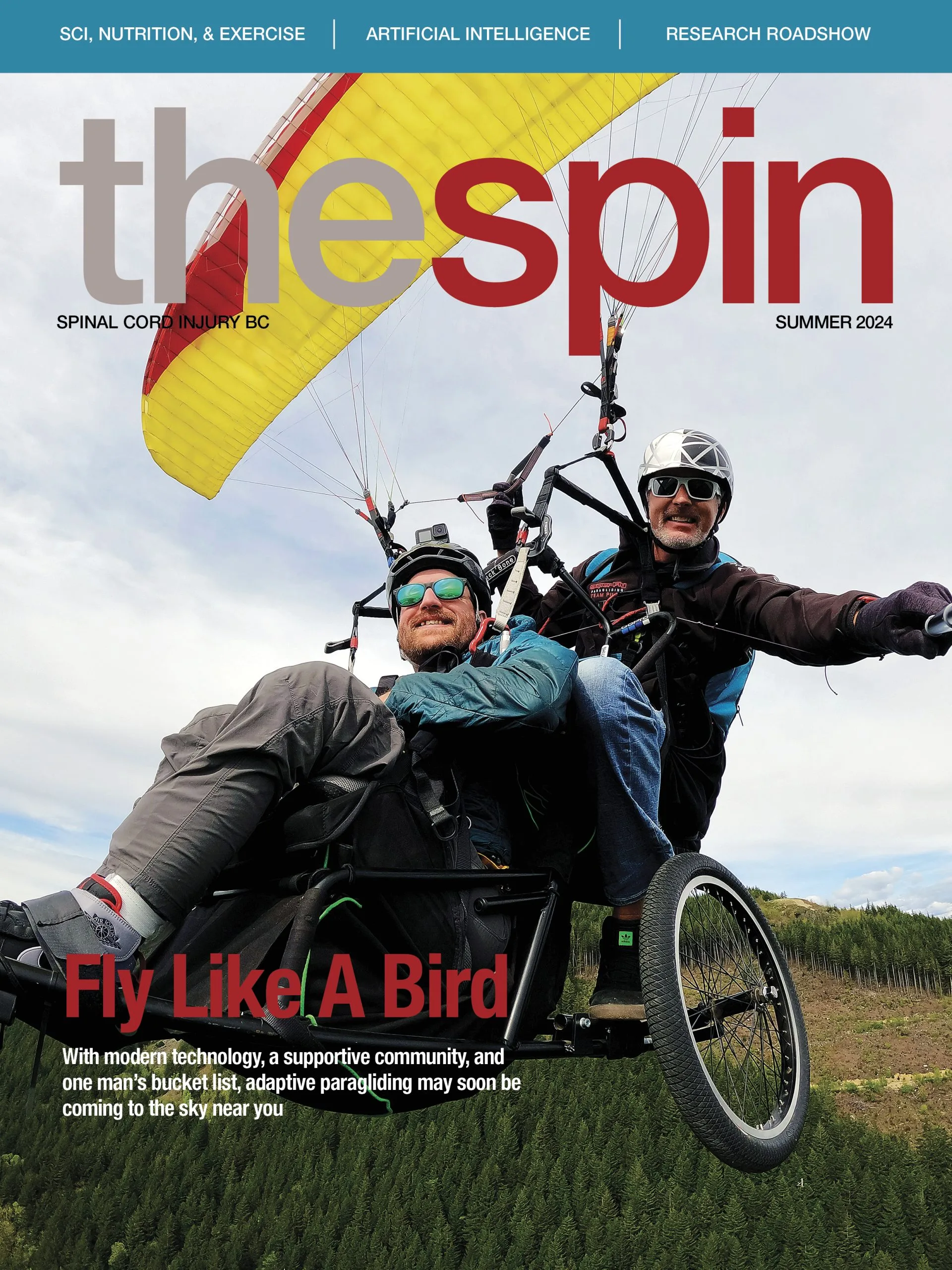
This article was originally published in the Summer 2024 issue of The Spin. Read more stories from this issue, including:
- Artificial Intelligence
- Adaptive Paragliding
- Research Roadshow
- Nutrition
And more!


